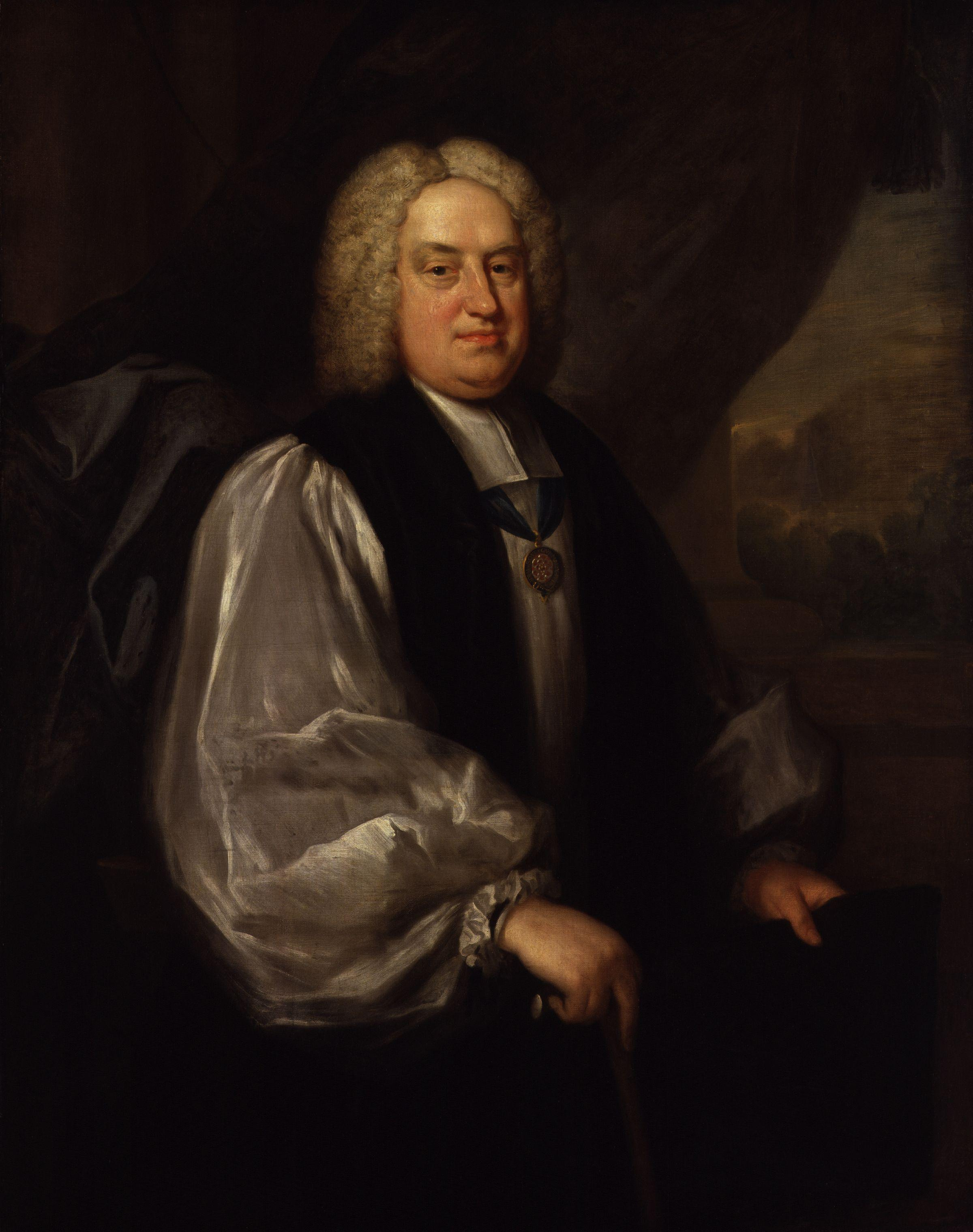
Benjamin Hoadly
1676–1761 · Anglican · Post-Reformation · England
Benjamin Hoadly (1676–1761) was an English bishop and theologian whose writings played a significant role in the religious debates of the early eighteenth century, particularly concerning the nature of Christian authority, the Church, and the relationship between faith and civil power. Born in Kent and educated at Cambridge, Hoadly became a prominent Anglican clergyman, serving as Bishop of Bangor, Hereford, Salisbury, and finally Winchester. He is best remembered for his sermon The Nature of the Kingdom of Christ (1717), preached before King George I, in which he argued that Christ’s kingdom is spiritual rather than earthly and that no human authority possesses dominion over the consciences of believers. This sermon provoked the famous “Bangorian Controversy,” a fierce debate over episcopal authority, church governance, and the role of tradition within Christianity. Hoadly was a strong advocate of reason, toleration, and the rights of private judgment, placing great emphasis on the inward reality of faith over external forms and institutions. While praised by some as a defender of Christian liberty, he was criticised by others for weakening the authority of the Church and diminishing the importance of historic tradition. His legacy remains that of a significant Anglican thinker whose writings shaped debates about conscience, authority, and the character of Christ’s reign in the modern age.