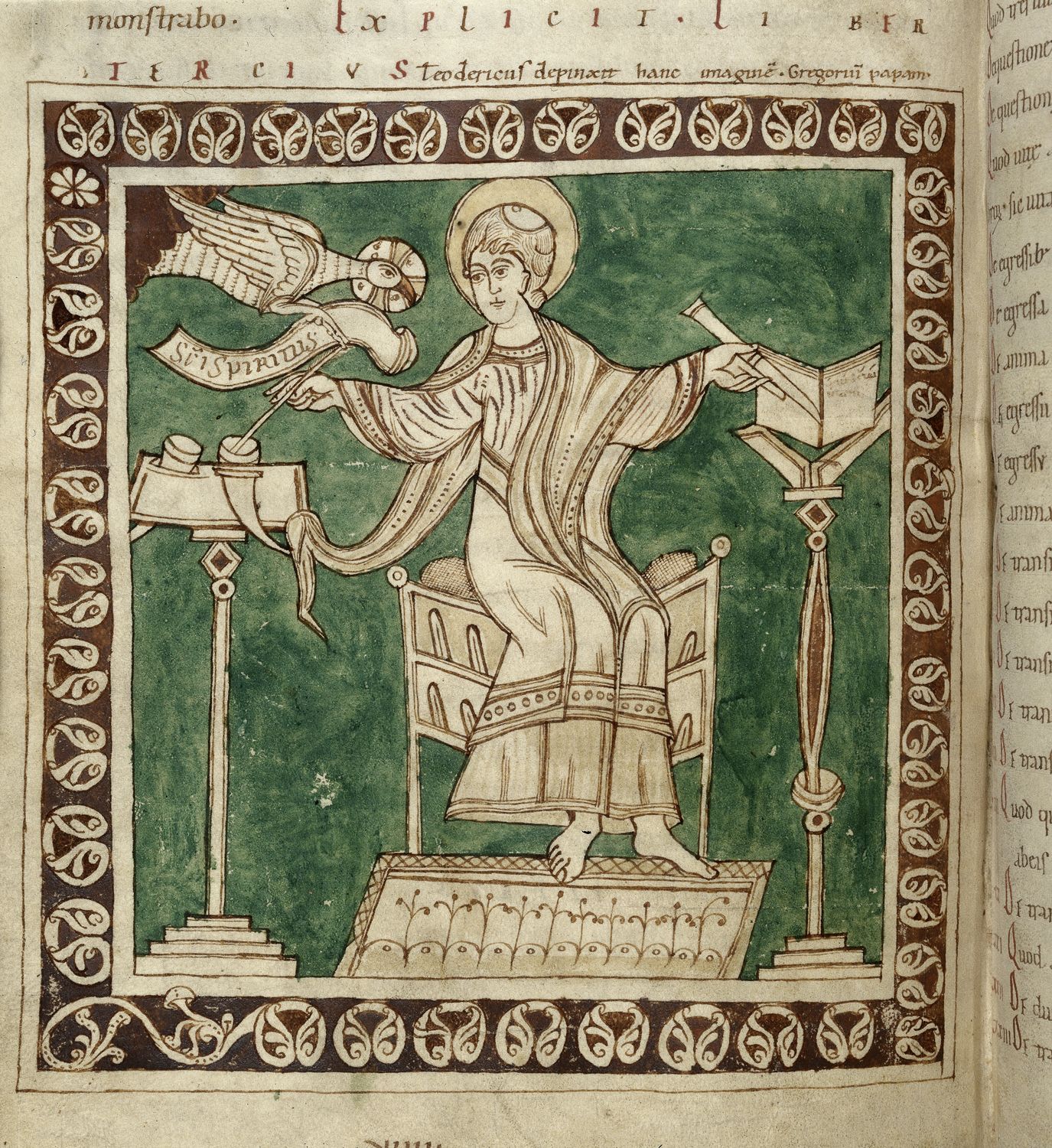
Gregory the Great (c. AD 540–604) was one of the most influential bishops, theologians, and pastors of the early medieval Church, whose wisdom and devotion helped guide Christianity through a time of profound upheaval. Born into a noble Roman family, Gregory renounced a life of wealth and public office to pursue the monastic life, later becoming Abbot of St Andrew’s monastery and eventually Bishop of Rome in AD 590. As pope, he devoted himself to the care of the poor, the reform of Church life, the strengthening of Christian mission, and the pastoral needs of a world transformed by the decline of the Roman Empire. His writings, especially the Pastoral Rule (Regula Pastoralis), Moralia on Job, and Dialogues, offered generations of Christians a vision of faithful leadership, spiritual warfare, contemplation, and the pursuit of holiness. Traditionally associated with the development of Gregorian chant, Gregory also played a key role in the evangelisation of England, sending Augustine of Canterbury and other missionaries to proclaim the Gospel among the Anglo-Saxons. Through his humility, theological depth, and tireless service, Gregory became remembered as a model shepherd of Christ’s flock and one of the four great Doctors of the Western Church, leaving behind a legacy of pastoral wisdom and spiritual guidance that continues to shape Christian life.