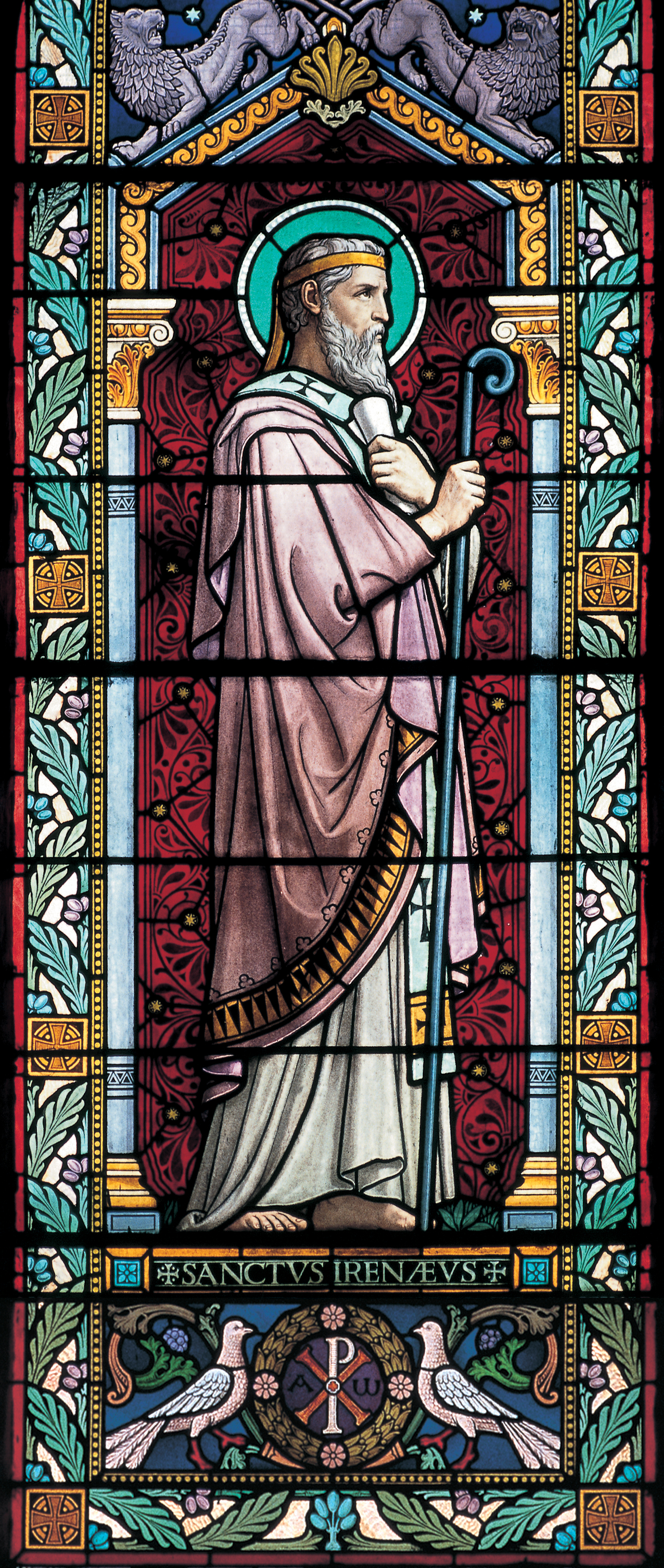
Irenaeus of Lyons (c. AD 130–202) was one of the most important bishops and theologians of the early Christian Church, whose writings served as a vital defence of the apostolic faith against false teachings and a powerful witness to the continuity of Christian tradition. Born in Asia Minor, Irenaeus was a disciple of Polycarp of Smyrna, who himself had known the Apostle John, and he later became Bishop of Lugdunum (modern-day Lyon) in Gaul. His greatest work, Against Heresies (Adversus Haereses), defended the teachings received from the apostles against Gnostic movements, proclaiming that salvation is found in the one God who created the world and has revealed Himself fully in Jesus Christ. Irenaeus developed the profound idea of recapitulation, teaching that Christ, the new Adam, restores and gathers up all things in Himself, healing the ruin brought by sin through His incarnation, death, and resurrection. He also wrote The Demonstration of the Apostolic Preaching, one of the earliest surviving summaries of Christian teaching, showing the unity of the Old and New Testaments in God’s saving plan. Through his defence of apostolic succession, the authority of the Scriptures, and the hope of bodily resurrection, Irenaeus became a bridge between the age of the apostles and the later Church, leaving a legacy as one of Christianity’s great guardians of the faith once delivered to the saints.