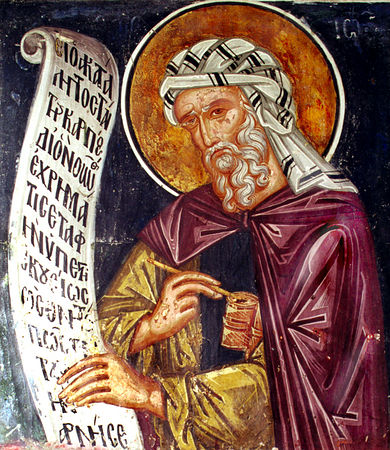
John of Damascus (c. AD 675–749) was one of the greatest theologians, hymnographers, and defenders of the Christian faith in the final centuries of the early Church, whose writings became a cornerstone of Eastern Christian theology. Born into a Christian family in Damascus under Muslim rule, John served for a time in the administration of the caliphate before withdrawing to the monastery of Mar Saba near Jerusalem, where he devoted himself to prayer, study, and the defence of the Church’s faith. He is especially remembered for his Fount of Knowledge, which gathered and explained the teachings of the Christian tradition, and for his Exact Exposition of the Orthodox Faith, one of the earliest systematic presentations of Eastern theology. During the controversy over the veneration of holy images, John wrote passionately in defence of icons, arguing that because the Son of God had truly taken flesh in Jesus Christ, the material world could be a vessel of divine grace and revelation. A gifted poet and composer, he also contributed many enduring hymns to Christian worship, including those still sung throughout the Eastern Church. Through his defence of the incarnation, his devotion to the Fathers, and his careful preservation of the apostolic inheritance, John of Damascus remains honoured as one of the great teachers of the universal Church.
No texts published yet.