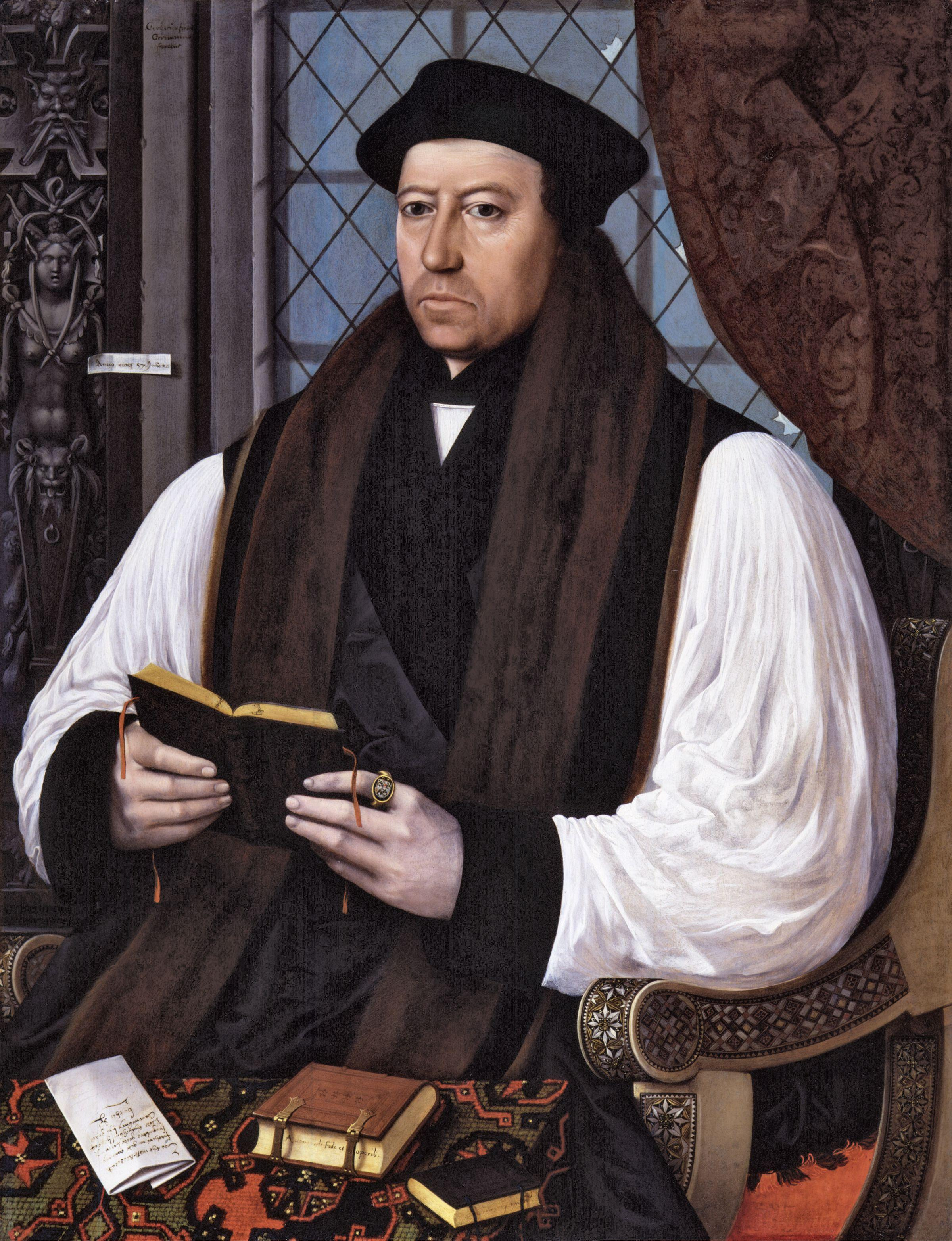
Thomas Cranmer (1489–1556) was the first Protestant Archbishop of Canterbury and one of the principal architects of the English Reformation, whose theological vision and literary gifts left a lasting mark on English-speaking Christianity. As Archbishop under Henry VIII and Edward VI, he helped shape the doctrine and worship of the reformed Church of England, most notably through the Book of Common Prayer, the Forty-Two Articles (later revised into the Thirty-Nine Articles), and the Book of Homilies. Cranmer sought to root the Church in the authority of Holy Scripture while preserving the beauty, reverence, and pastoral wisdom of the historic liturgy, producing prayers whose biblical cadence has nourished generations of Christians. During the reign of Mary I he was imprisoned and condemned for heresy, and although he briefly recanted under intense pressure, he publicly renounced those recantations before his execution, declaring his faith in Christ and the gospel he had preached. Burned at the stake in Oxford in 1556, Cranmer is remembered by many Christians as a martyr whose writings continue to shape Anglican worship and Protestant theology throughout the world.